
BIO-2-PRINT
From waste to worth: Building a value chain for underutilized natural fibres as feedstock in 3D printing
Branch: Chemistry and bioeconomy
Duration: 3/2025-02/2028
Region: International
Financed by: Interreg NPA
Budget: 1,5 M€
https://www.interreg-npa.eu/projects/bio-2-print/
Project Manager: Rathish Rajan
BIO-2-PRINT is a collaboration between six partners in Finland, Ireland and Sweden. Our shared goal is to give new value to underutilized natural fibres from industrial, agricultural and forestry sectors
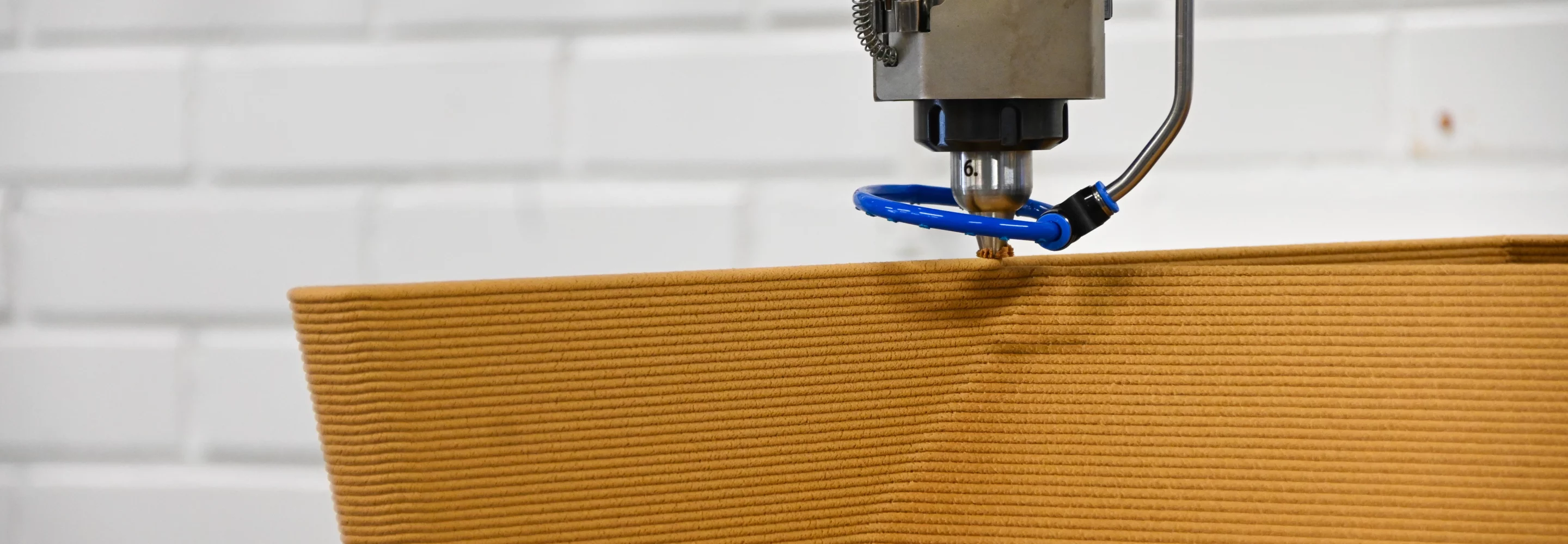
Instead of being used in low-value applications or discarded, these fibres can become the raw material for tomorrow’s manufacturing and construction industries. Through applied research, pilot-scale production and smart manufacturing, we are transforming plant-based byproducts into advanced 3D-printing feedstock.
From Waste to Innovation
BIO-2-PRINT is developing new composite materials made by combining natural fibres with plastics or concrete. These composites are engineered into polymer composite pellets and filaments that can be 3D printed into durable parts for construction, tools, and design elements. The project will explore the utilization of these natural fibres in concrete mix for 3D printing. Another ambitious objective of this project is to extract chemical compounds from these natural fibres and use them as functional additives to improve the properties of 3D printed polymer and concrete products.
This approach helps to keep biomass in use longer, reduce reliance on virgin raw materials, cut greenhouse gas emissions and offer affordable alternatives for industry.

Building Local Value Chains
Our focus is on creating fully localized circular value chains in the Northern Periphery and Arctic region. That means working closely with farmers, small businesses, and regional stakeholders to ensure that the entire process — from fiber collection to end-use applications — happens as locally as possible.
The BIO-2-PRINT project includes:
- Fiber collection and preprocessing in collaboration with agricultural producers.
- Material development and compounding in smart manufacturing labs.
- Design and real-world demonstration with regional companies and makers.
- Workshops, pilots and knowledge sharing to support wider uptake.

Why It Matters
This project is about more than just new materials. It’s about changing the way we use resources, moving from a linear “take-make-dispose” model to a truly circular economy. It’s about turning overlooked local biomass into useful, valuable products. It’s also about creating new opportunities for rural businesses and communities.
BIO-2-PRINT shows that sustainable innovation doesn’t have to come from far away. It can grow from what’s already around us.
08/2025
Reading tip: Article about the project in Silicon Republic
Centria University of Applied Sciences (Lead partner, FI)
Manorham Innovation & development Clg T/A Future Cast (Ireland)
Munster Technological University (Ireland)
Innomost Oy (Finland)
Luleå University (Sweden)
Umeå University (Sweden)
The BIO-2-PRINT project is a continuation of the BIOPRINT project.