Robotics expert building tomorrow’s solutions
Ajay Sharma, who has a strong background in industrial robotics, develops user-friendly automation solutions.
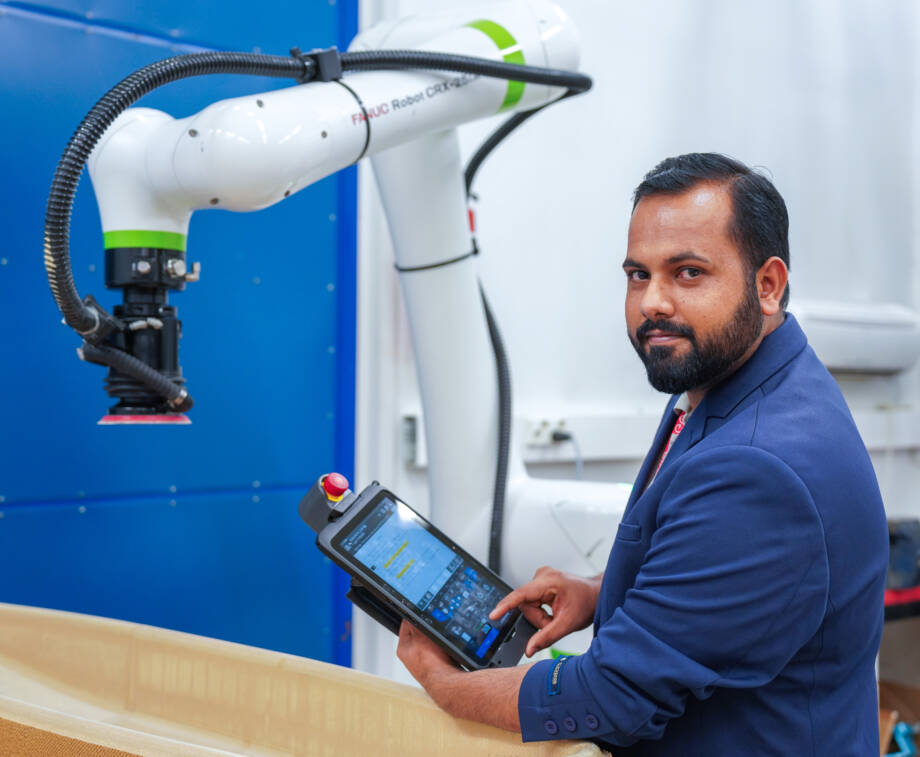
Ajay Sharma is part of the Robotics and artificial intelligence top research group within Centria’s R&D division. Sharma’s primary focus areas include industrial robotics, mobile robotics, and the development of automation solutions that enhance operational efficiency.
– I am also actively involved in designing and implementing turnkey automation systems. In addition, my role encompasses the exploration of emerging technologies, development of innovative applications, and identification of new research and project opportunities.
Sharma is currently working on two R&D projects.
In the RoboFlex project, he is addressing one of the key challenges in industrial automation: the wider adoption and flexible deployment of mobile robots in dynamic production environments. The project focuses on integrating heterogeneous mobile robot brands into one system and with industrial robotic manipulators to enable autonomous material handling and intralogistics operations.
– I serve as the technical lead for mobile robotics and fleet management systems, focusing on the practical adoption of autonomous mobile robots in industrial environments. The project aims to demonstrate effective implementation strategies for warehouses, manufacturing facilities, and logistics operations across Northern Ostrobothnia.
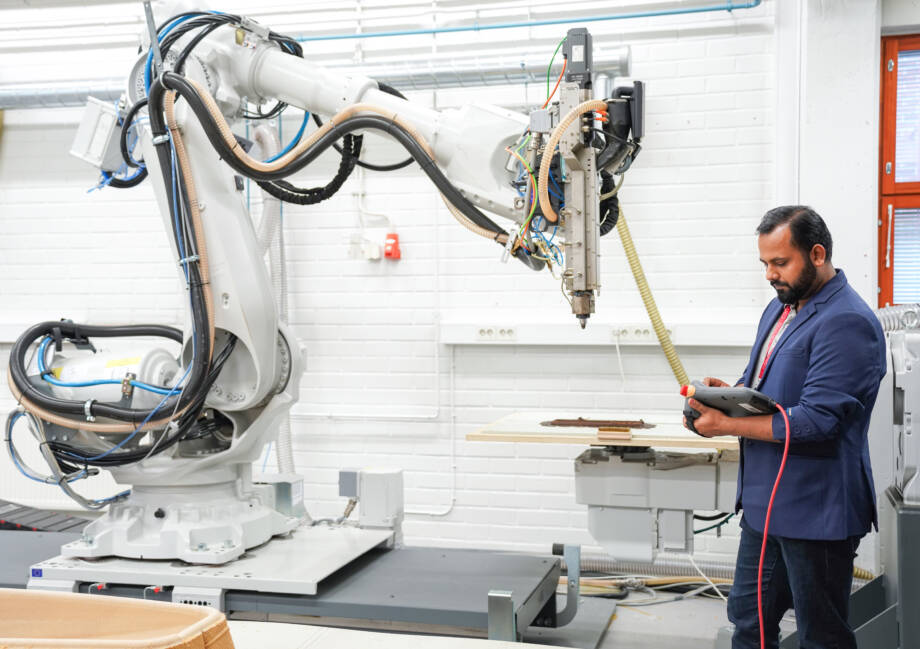
Meanwhile, the RoboPinta project focuses on bio-based materials. Sharma works as a robotics integration engineer. His role involves developing and integrating multifunctional robotic cells capable of supporting applications such as 3D printing, milling, sanding, and other advanced manufacturing processes.
–In the RoboPinta project, the objective is to develop a multifunctional robotic manufacturing cell for large-scale boat mold production using additive and subtractive processes. The solution combines technologies to reduce manual work, improve process efficiency, and enhance product quality.
The outcomes are expected to generate valuable practical knowledge on the implementation of advanced robotics and provide new approaches for improving manufacturing and material-flow operations across Northern and Central Ostrobothnia.
Sharma also has personal goals for his research work.
As a research worker holding work experience of a decade in industrial robotic applications, I aim to develop real industrial solutions to make current industrial and mobile robots smarter, flexible and intelligent.
What fascinates Sharma most about robotics and AI is the realization that every new breakthrough reveals additional layers of complexity and opportunity. As technologies such as Physical AI continue to evolve, they are reshaping how robots perceive, learn, and operate, often unlocking capabilities that existing hardware has always possessed.
–The field feels like an ever-expanding puzzle, where each advancement connects previously unrelated pieces. That constant discovery is what keeps me engaged and motivated.
When Sharma is asked how he sees robotics and AI developing in the coming years, he is considering the following:
– While robotics and AI have achieved significant real-world adoption, a key question remains: Do current technologies truly meet long-term operational needs? Despite rapid progress, many applications still require greater reliability, adaptability, and human-centered intelligence to perform consistently in complex environments. As recent advancements have highlighted both the potential and limitations of AI, I believe the next major evolution in these fields will focus on human-centric capabilities, driving a significant step forward in the Industry 5.0 transition.
A three-year Mechanical Engineering diploma laid the foundation for Sharma’s career, leading to his first position in industrial robot programming and operations. He subsequently earned a bachelor’s degree in computer applications, expanding his expertise across automation, machine vision, and smart industry solutions.
Sharma comes from India, a country known for its rich cultural diversity, strong engineering talent, and rapidly growing technology ecosystem. Growing up in such a dynamic environment fostered his interest in innovation, problem-solving, and emerging technologies.
– This passion eventually led me to pursue a career in research and development in Finland, a country recognized for its innovation-driven culture and strong commitment to technological advancement.
Has Sharma noticed any interesting cultural differences in Finland?
– Absolutely, many aspects of life in Finland differ from what I was accustomed to in India. From replacing my daily cup of masala tea with morning coffee to learning that silence can be just as meaningful as conversation, the experience has been full of pleasant surprises. What has impressed me the most is the low-hierarchy work culture, where open discussions and constructive disagreements are encouraged, often leading to the most valuable ideas and innovations.
Sharma’s interests include cricket, poetry, science documentaries, and biographies of influential scientists. He also enjoys listening to Hindi and Punjabi music, which helps him unwind and stay connected to his cultural roots.
Tomi Pitkäaho