Forging a community in Kranj – Why an accelerator needs more than desks and reliable Wi-Fi
This is our Travel log for our study visit to Slovenia and Austria, welcome!
We visited places. We ate apricot dumplings. We drove on mountainous roads and experienced weather with commitment issues. We conquered dragons in Ljubljana. This created memories, photographs and several observations of questionable relevance to regional development.
More importantly, we met people who genuinely wanted to share what they had learned about building entrepreneurial communities outside the largest cities. Our first stop was Kovačnica business incubator in Kranj, a city roughly the size of Kokkola.
A brief explanation of Northborne
Northborne is an Interreg Aurora-funded project developing a rural, community-based accelerator for startups and innovative companies in Ostrobothnia, Finland, and Västernorrland, Sweden. The aim is not to import a glossy metropolitan accelerator and hope nobody notices the distances, languages or tractors. It is to build support around the people, industries and communities that already exist in our regions.
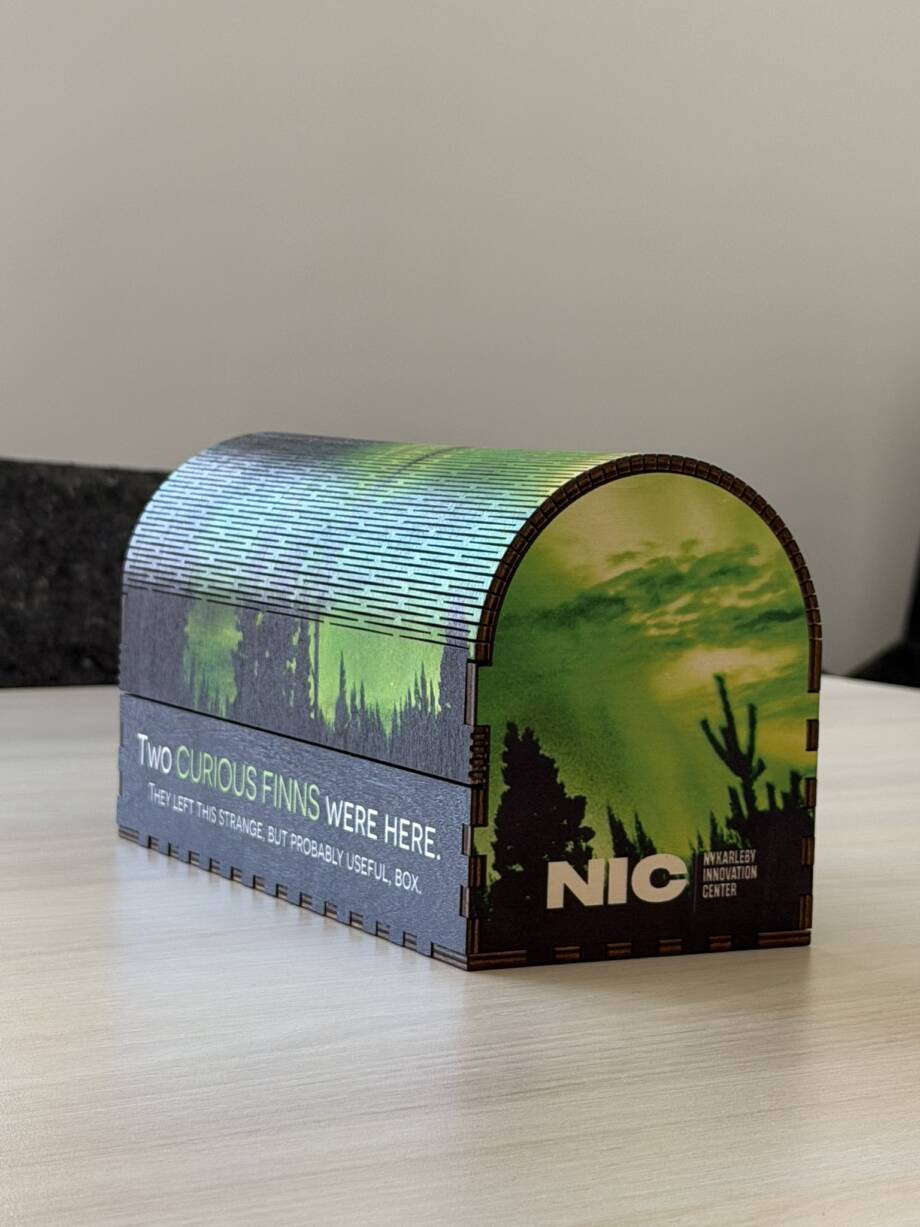
Nothing unites Europe like administration
At Kovačnica we were greeted by Tamara and instantly bonded over EU-project bureaucracy while waiting for Andraž, our host. Nothing brings Europeans together quite like shared administrative suffering.
Kovačnica means forge. A place where ideas are forged into reality, perhaps? It began as a grassroots initiative in an old school, giving forward-thinking people somewhere to meet and make things happen. Today it operates from a renovated former post office, made possible through cooperation with the municipality and the regional development company.
That cooperation matters. Community-driven does not mean doing everything alone. Grassroots energy can begin something, while municipalities and regional organizations can give it permanence, space and room to grow.
Give people reasons to return
Kranj and the surrounding region face something familiar to Ostrobothnia: young and ambitious people are drawn towards the bigger cities, where opportunities and like-minded people appear easier to find. Kovačnica works against this by creating those opportunities closer to home. Sometimes people leave, as they should. A strong community can, however, give them a reason to return.
Kovačnica combines coworking with mentoring, expertise, international exchanges and investor connections. They aim to organize some kind of happening every week, adding up to around 50 events each year. A community does not become a community simply because there is a room with desks. People need reasons to come, as well as reasons to return.
They also run PONI Gorenjska, part of a Slovenian programme that gives participants four months of paid employment, training and mentoring to develop a business idea towards a company. Removing the need to earn a living elsewhere during those months gives people something remarkably useful: time to properly test whether an idea works.
Put people and products on display
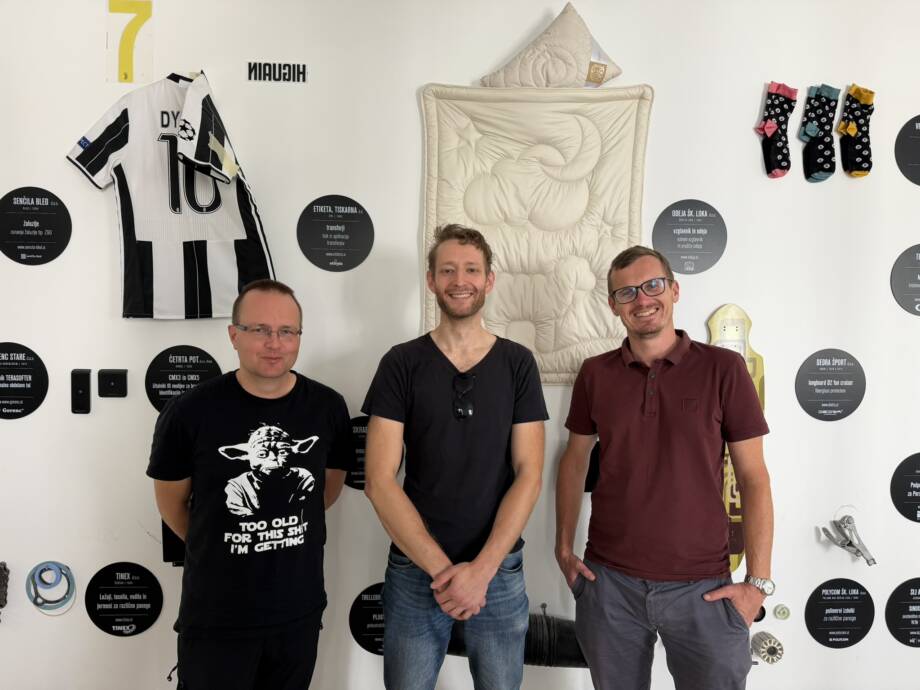
Kovačnica makes its community visible. The people involved are shown by name and face, while locally developed products and inventions are displayed throughout the building. One came from a company making automation more affordable for small cattle farms, a fitting example of innovation growing from the actual needs of a region.
Displaying products turns innovation from an abstract word into something visitors can see and touch. Showing the people behind them makes participation feel possible. Real people are creating real things here. Perhaps you could too.
For Northborne, the lesson was simple: an accelerator is not only a programme. It is a place, a rhythm and a group of people who keep showing up.
Next in the series
In Part 2, we travel to a former mining valley where a globally successful technology company decided that private success was not enough. There are factories, acrobats and, reassuringly, a tractor.
The Northborne – Accelerating bold futures from remote beginnings project is an Interreg Aurora project co-funded by the European Union. Region Västernorrland and the Regional Council of Lapland also act as funding partners. The project partners are Centria University of Applied Sciences, Bizmaker, Coompanion, and Nykarleby Innovation Center.
Jimmy Nymark
TKI-asiantuntija