A Different Pace of Life: Giordana Capelletti on Working and Living in Ostrobothnia – Finding Home Under the Nordic Sky
The project staff of the ”Innovative solutions for the office of the future” project had a talk with Giordana Capelletti on a beautiful September day in Sundom, outside Vaasa. Giordana moved here with her family from Verona in Italy in 2014 and have lived here since then, for twelve years. We were eager to hear her story on why her family ended up in Ostrobothnia, Finland and her thoughts on working and living here.
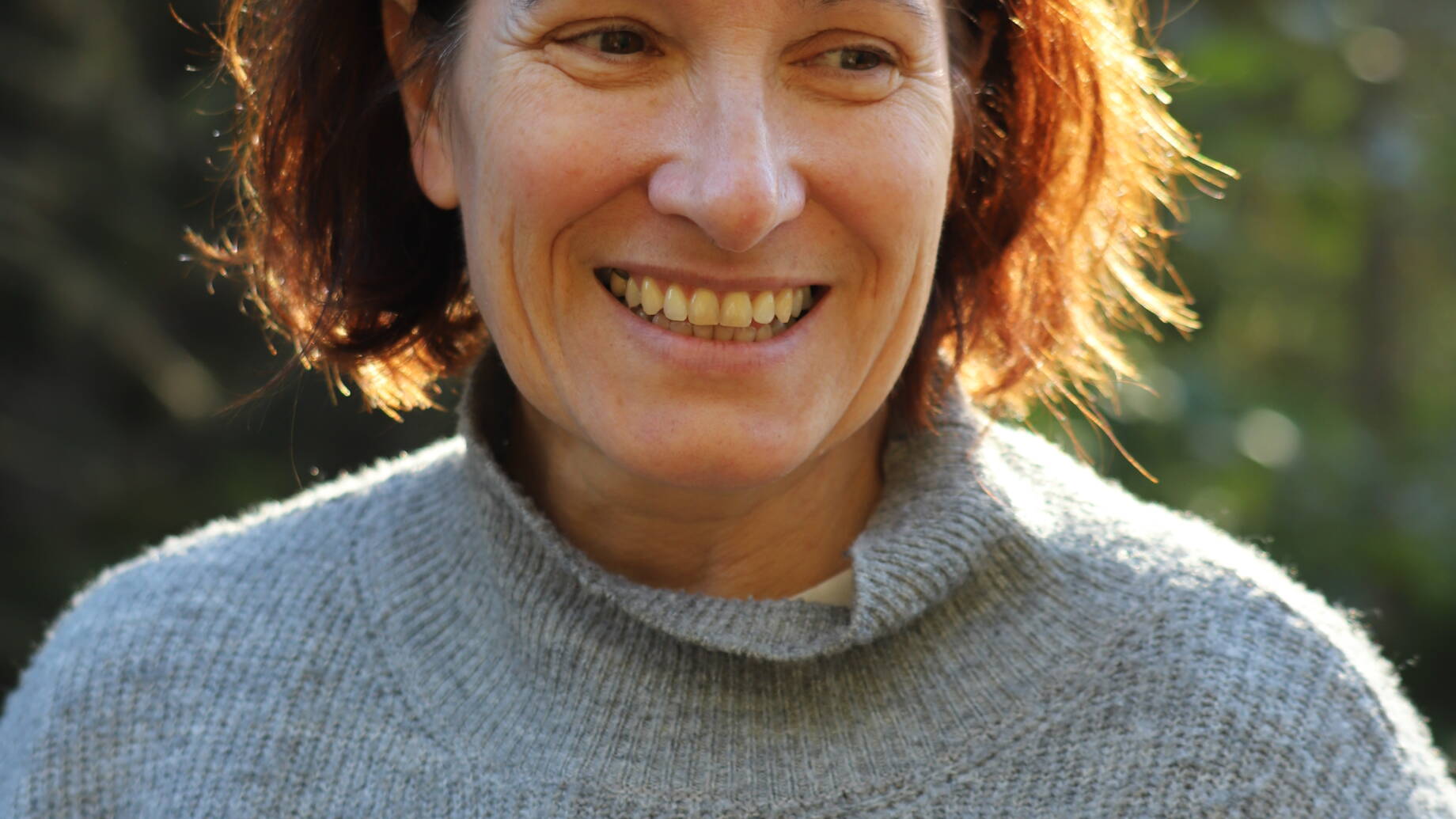
As we talk with Giordana after her finishing her workday at Wärtsilä, we walk along the paths in Sundom, occasionally halting for a while. The September sun is warm and drenching us in sunshine. It was a bit different when Giordana first visited Vasa – “A cousin of my husband from Verona lived here in Vaasa and he invited us to visit him. We were curious, because we had never been to the north. We have been traveling a lot, but more in the southern parts of the world. We came to Vaasa for a long weekend in November. We had never been to Finland before that. Because of our work, we had to come in November – and we liked it! I remember that we stayed in a hotel by the main square in Vaasa. In the morning it was completely dark, but what I liked most, at the first impact, was that it was so quiet.”
The family was already thinking about having an experience abroad for a period, as they wanted to explore the world – not for a vacation but for an extended period. They were open to moving somewhere in the southern parts of the world, which was the part that they knew better. “But when we came here, we were like ah, it’s quiet!” Giordana says with a broad smile.
Before moving, they did thorough research on the schools, because their sons were ten and nine at that time. The family visited Vasa for a second time, for another long weekend in February, and made their final decision: “We waited until the school finished in Italy, in June, and we packed one car and we came here”.
Giordana’s husband was still working with his own company in Italy until the end of the year. He went back to Italy after a while, while Giordana was working on the accounting from Finland. The children would start school in August in Finland, but there was a full six week of summer before that. “We went to the beach in Hietasaari almost every day and for the children it was a time for getting used to their new life and having it feel like vacation. So, when August came and they started school, they were kind of prepared, at least to the environment and how people are in Finland.”
In September 2014, the family found a house in Sundom, and have lived there since then.
We ask Giordana about her thoughts on nature in Finland and does a bit of joking on the flatness of Ostrobothnia, as opposed to Italy. Giordana laughs and says that her husband was happy to find the black slope in Levi, since he’s used to all the black slopes in the Dolomites, close to Verona.
“The Finnish nature had a major impact on us in general, and on me especially. It is quiet and green, I love the colors, and I can really smell the trees! And it’s so clean. Even as we walk now close to a main street, you can hear cars, but if we walk just a few hundred meters away, it’s silent! I go out after work every day, for a walk.”
We talk about stars for a while and discuss the fact that you cannot see the stars in the same way in Verona: “Where we live now, you can see the stars from the backyard. And the Northerns Lights are so beautiful! You don’t have to go somewhere far away to see them!”
Could companies use the Finnish nature to attract an international workforce? “It really depends on the person. If you find the right person, what we have around us here is very attractive. The closeness to the sea and the possibility to have a “summer life” in summer and then the winter and the sea ice and the possibility of winter activities such as skiing right from your front door. In Verona, if you want to ski, you must take your car somewhere.”
But doesn’t she find the dark period hard, then, we wonder? “No, it’s so nice!! It’s dark and peaceful. When we finish work, we go out for a walk, then I start cooking because I like cooking a lot. After that we can relax for the rest of the evening. There’s nothing else we must do, just free time. I sleep better in winter than in summer. The summer brings more activities.” There is a short break in the interview where we bond over the fact that November actually can be a very nice and relaxing month, without excessive demands and stress.
Öjberget in Sundom is one of Giordana’s favorite places in nature. It is close by and has many different routes. “I like to see what is changing in nature with the seasons, like now, with the lingonberries turning red. In spring and summer, the green is a lighter shade. I grew up in the city and I never paid attention to the changes in nature before moving here. Where we were living when I grew up, it was all concrete and asphalt. I really can’t remember nature. Some flowers in the backyard, perhaps, that was it!”
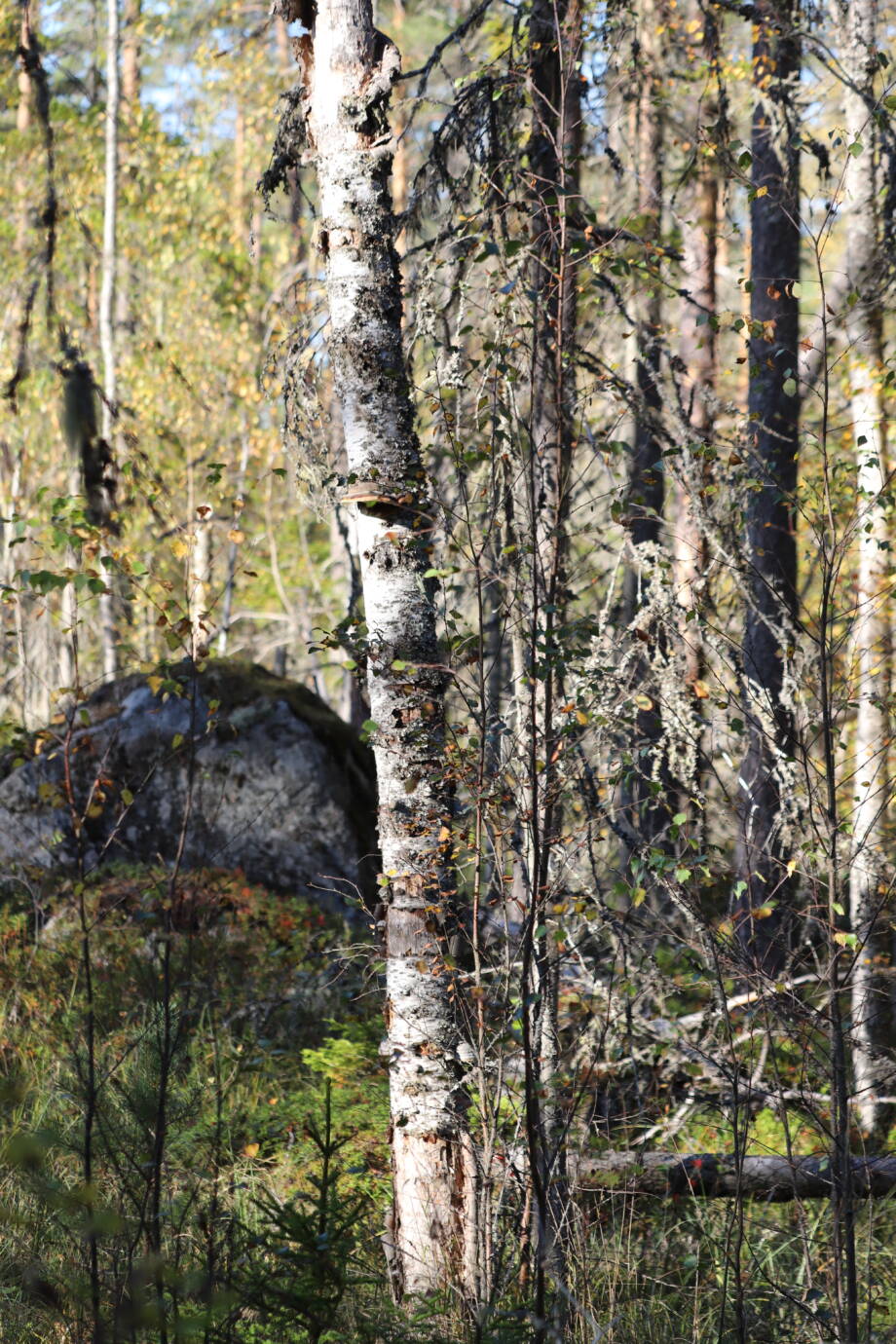
Giordana thinks that there is a difference in the relationship to nature between Finnish and Italian people. She finds that it comes more natural here in Finland as we are surrounded by nature. Children go out in nature already when they are small and they also go out in school: “In Italy, it would never happen. They’d call the police, that children are roaming around in the forest!” she laughs.
Giordana also finds that people are more respectful towards nature in Finland. Interestingly, she has seen a small decline during the twelve years she has lived in Finland: ”Children are throwing more trash around them now. Sometimes my husband and I take a garbage bag with us when we go for a walk. I think people might think that we are crazy, but we don’t like to see the trash. But in comparison with Italy, it’s much worse there. I hope this decline in Finland don’t continue.”
Giordana works in accounting at Wärtsilä. She works mostly remotely; one day a week she is at the office. “Which is nice, because there I meet colleagues,” she says, ”I can organize my work quite well from home. I have a room upstairs which is dedicated only to work. I don’t get distracted by the computer in my free time, as I’m in my home office for only the eight hours I work. “
The work-life balance feels more adequate here “In Italy we didn’t have free time to walking or skiing after working. We had our own company, and we worked until seven or eight in the evening.” Also, the time it takes to commute to work is much less here. In Verona, for example, a relatively short distance might take a long time due to traffic jams. Giordana laughs a bit on Finnish people, that might stress out on one red light on the way to work, compared to Italy work commuting is easy and fast. There are also differences in the amount of bureaucracy: ”People here are worried about work bureaucracy and I’m like nooo… you have zero problems!” Giordana laughs.
She points out that there are differences in how you adopt to the pace of live here: “I do know there are Italians that came here and went back because they like the pace in Italy more. We were used to that pace of living, but we prefer it here, we adapted to this kind of life and we like it. I think that we generally have more time to think here. Walking in the forest is good for letting your thoughts wander.”
Giordana arranges her workday in a way that she starts early, often at 6.30, and finish work early in the afternoon. The major part of her working day takes place between 6.30 and 12 when her mind is clear. “I tend to leave the easiest tasks to be done after lunch. After I finish work, I go for a walk to clear my mind. The following morning, at 6.30 when I start work, I start with the more difficult tasks, and they feel much easier than in the afternoon”.
There is no ordinary window in Giordana’s home office, but she has a roof window: “Every now and then I look up, and I look at the sky! It is really nice, both when the sky is blue and when it’s cloudy and the clouds are running. I look for if the clouds are coming from the north or from the south. I look up for just a few seconds, but it gives my brain a break.”
It looks like the family will stay in Finland for a while: “We have bought a house. We were not really looking to buy a house, but it kind of presented itself to us! It was unexpected, only happened last month.” The only thing Giordana miss about Italy is the food. “I really, really like to prepare everything from scratch. I’ve also learned to do Finnish receipts, so I adapt.”
As we walk away from our interview with Giordana, we talked about on how unexpected it was to find a positive view on what many feels is the disadvantage of Finland: the darkness in winter, the silence and slow pace of life. Should we think about these things from a different point of view?
Through the project “Innovative Solutions for the Office of the Future”, a two-year ESF+ funded project at Centria University of Applied Sciences, research-based knowledge on the positive effects of outdoor environments on health, creativity, and cognitive processes is being highlighted.
The project provides companies and organizations in Ostrobothnia with knowledge and inspiration to adopt new ways of working that promote sustainable, long-term well-being, as well as creativity and work motivation among employees.
Text: Sara Kåll-Fröjdö & Maria Hofman-Bergholm, Centria University of Applied Sciences
Photos: Sara Kåll-Fröjdö, Centria University of Applied Sciences