Hardware is hard and success should travel – What Katapult and Dewesoft are giving back to Trbovlje
This is the second part of the travel log for our study visit to Slovenia and Austria. The second day included a CNC hall, laser cutters, welding equipment and a conveniently parked tractor outside. In other words, we had travelled hundreds of kilometres only to arrive somewhere unexpectedly Ostrobothnian.
We were in Trbovlje, a former mining community roughly the size of Närpes, visiting Katapult and its planned City of Acrobats. Olga gave us a thorough tour of an organization built around the support of Dewesoft. Or perhaps together with Dewesoft. The two are difficult to separate, and that is precisely the point.
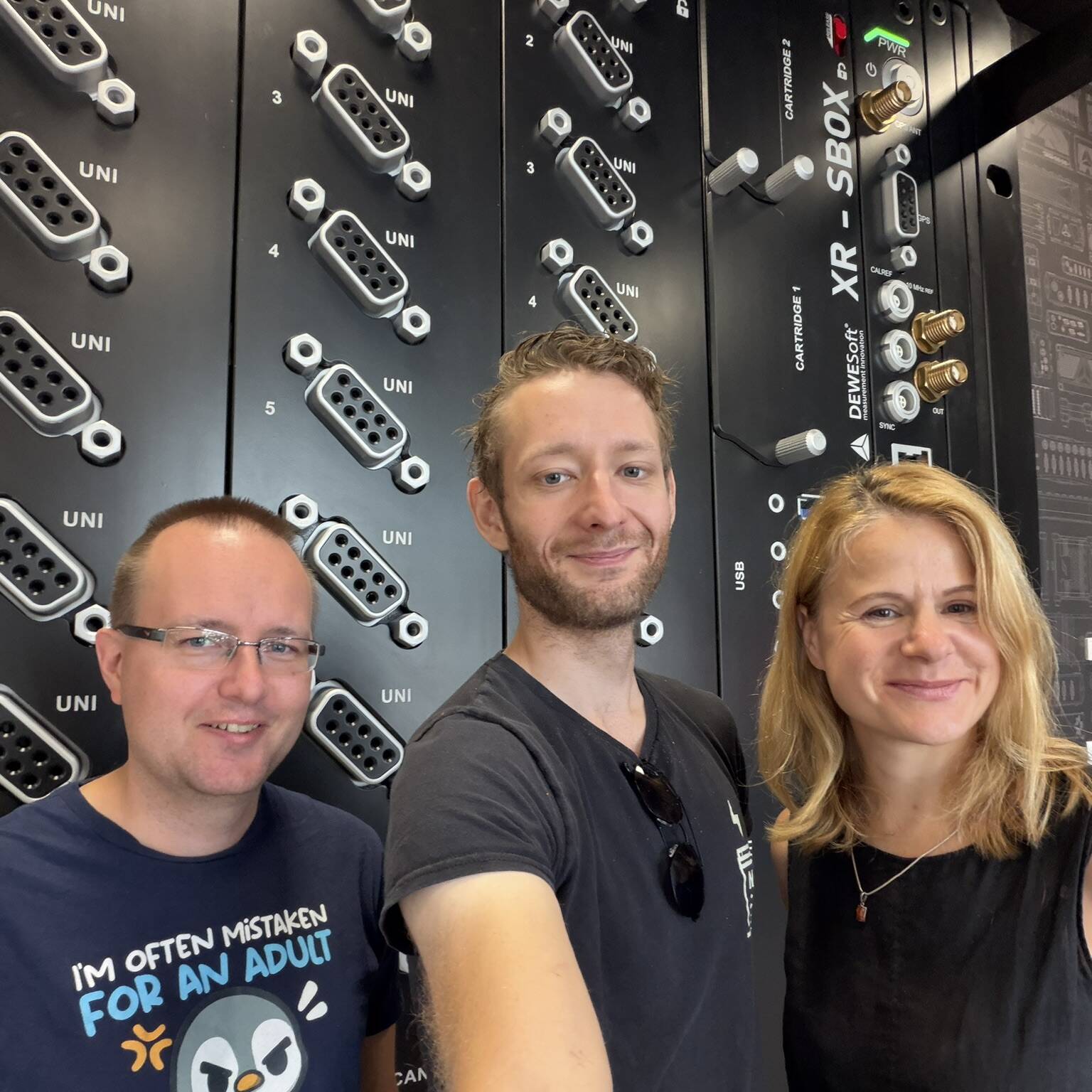
What Northborne is trying to solve
Northborne is developing a rural, community-based accelerator for startups and innovative companies in Ostrobothnia and Västernorrland. One central question is how smaller companies can benefit from the knowledge, equipment and networks already present in strong industrial regions, without first acquiring a factory, an accounting department and a minor miracle.
A company that stayed
Trbovlje and the surrounding Zasavje valley were built around coal mining and industry. When mines and factories closed during Slovenia’s transition in the 1990s, jobs disappeared, people moved away and the valley lost much of its confidence.
Dewesoft was founded in Trbovlje roughly a quarter century ago and grew into an international measurement-technology company whose products are used by organisations ranging from car manufacturers to NASA. It could probably have moved its headquarters somewhere larger, shinier and closer to an airport. It did not.
Yet Dewesoft’s success did not automatically repair the surrounding valley. Its founders therefore asked a more interesting question: how could what they had built benefit more than their own company?
Katapult grew from the answer
Dewesoft shared what it knew best: infrastructure, technical expertise, production capacity and connections. Katapult turned these into a support system for entrepreneurs developing physical products. As they put it: hardware is hard.
Through Katapult, startups can access experienced mentors, test laboratories, production lines and shared services. Support with purchasing, accounting and administration allows founders to concentrate on developing and selling their products instead of becoming reluctant experts in everything at once.
We visited Dewesoft’s CNC hall, where the company’s own components are manufactured but where expertise and capacity can also support Katapult’s companies. Katapult Metal, with its laser cutters, press brakes and welding equipment, looked surprisingly familiar. There was even a tractor outside. Precisely as there should be.
This is where the model becomes especially relevant to Ostrobothnia. Our region already has remarkable industrial knowledge, machinery and production capacity, and tractors. Making some of those powerhouses accessible to smaller companies and new entrepreneurs could be a genuine competitive advantage.
The City of Acrobats
Katapult and Dewesoft are now expanding the idea through the planned City of Acrobats. Their existing facilities have become too small, so the goal is a larger environment where startups, engineers and established companies can work, learn and manufacture alongside one another. Planned for development between 2024 and 2034, it extends the same formula: combine Dewesoft’s experience and infrastructure with the energy of young companies creating physical products.
The ambition is larger than constructing buildings at a former mining site. It is about creating new possibilities in the valley and showing that people do not have to leave to work with advanced technology or build an international company. In a place once defined by industries that disappeared, the City of Acrobats is an attempt to build the next ones.
Giving back starts early
Katapult does not take ownership of the startups it supports, and its profits are reinvested into the environment for young entrepreneurs. Its willingness to give back also reaches children. Through the S.O.S. School initiative, Katapult has developed hands-on visual learning tools that help young pupils understand mathematics. The work received a national innovation award in 2024.
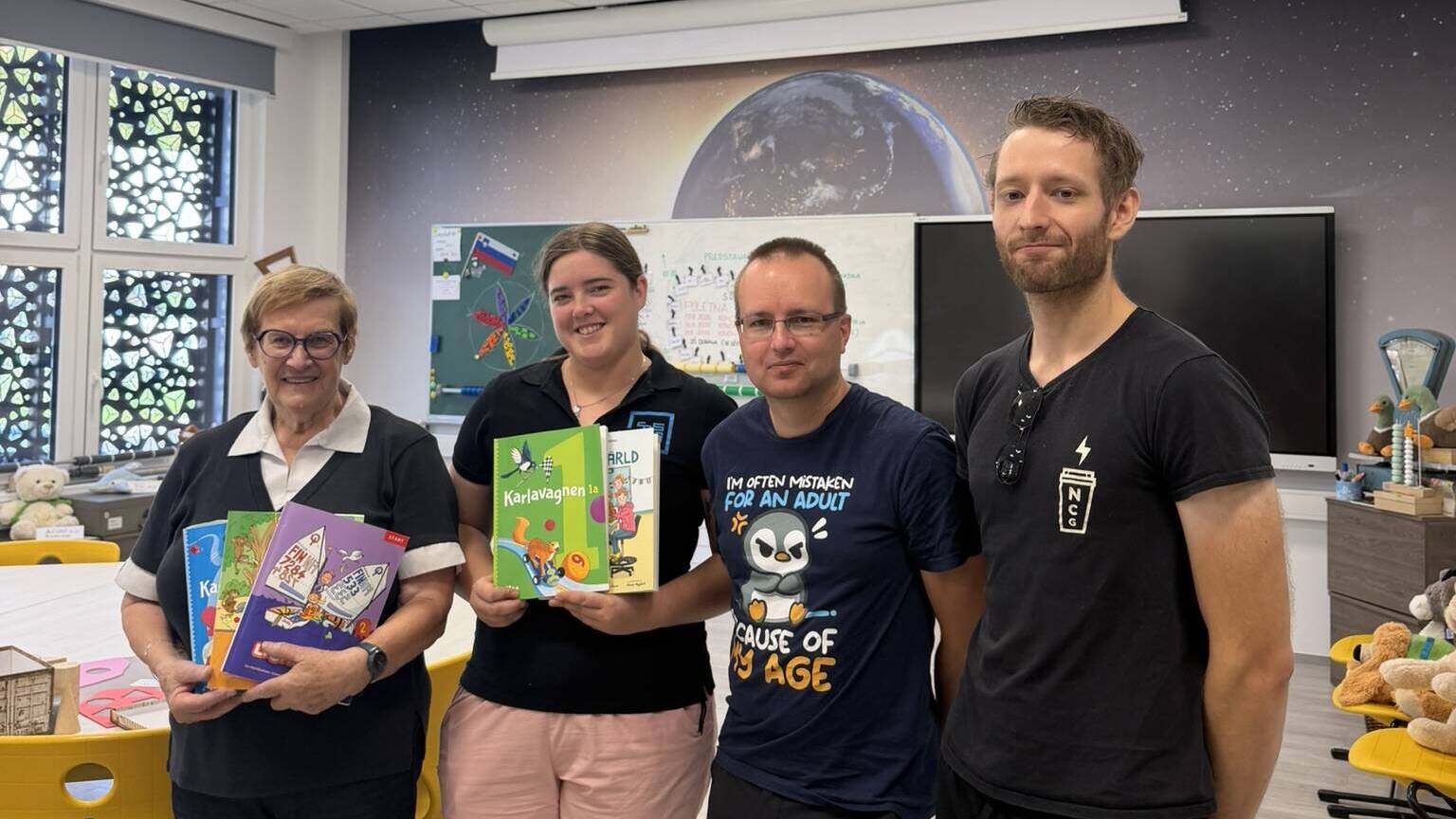
An entrepreneurial region does not begin when someone registers a company. It begins earlier, when children are encouraged to experiment, understand and create.
Katapult’s strongest lesson for Northborne may therefore be this: a regional accelerator should not only ask what the region can give a growing company. It should also ask what successful companies can give back to the place that helped them grow.
Read the first part of the travel log here: Forging a community in Kranj –Why an accelerator needs more than desks and reliable Wi-Fi – Centria
The Northborne – Accelerating bold futures from remote beginnings project is an Interreg Aurora project co-funded by the European Union. Region Västernorrland and the Regional Council of Lapland also act as funding partners. The project partners are Centria University of Applied Sciences, Bizmaker, Coompanion, and Nykarleby Innovation Center.
Jimmy Nymark
TKI-asiantuntija