Small places large plans and one respectable Škoda – What Ajdovščina, Graz and Slovenia taught us about connecting an ecosystem
Ajdovščina is roughly the size of Nykarleby. It has a large ice cream factory, electric aircraft and plans for a science park worth around 200 million euros. We do not have precisely the same things in Nykarleby. But still… they make things. And apparently, they are not frightened by large numbers.
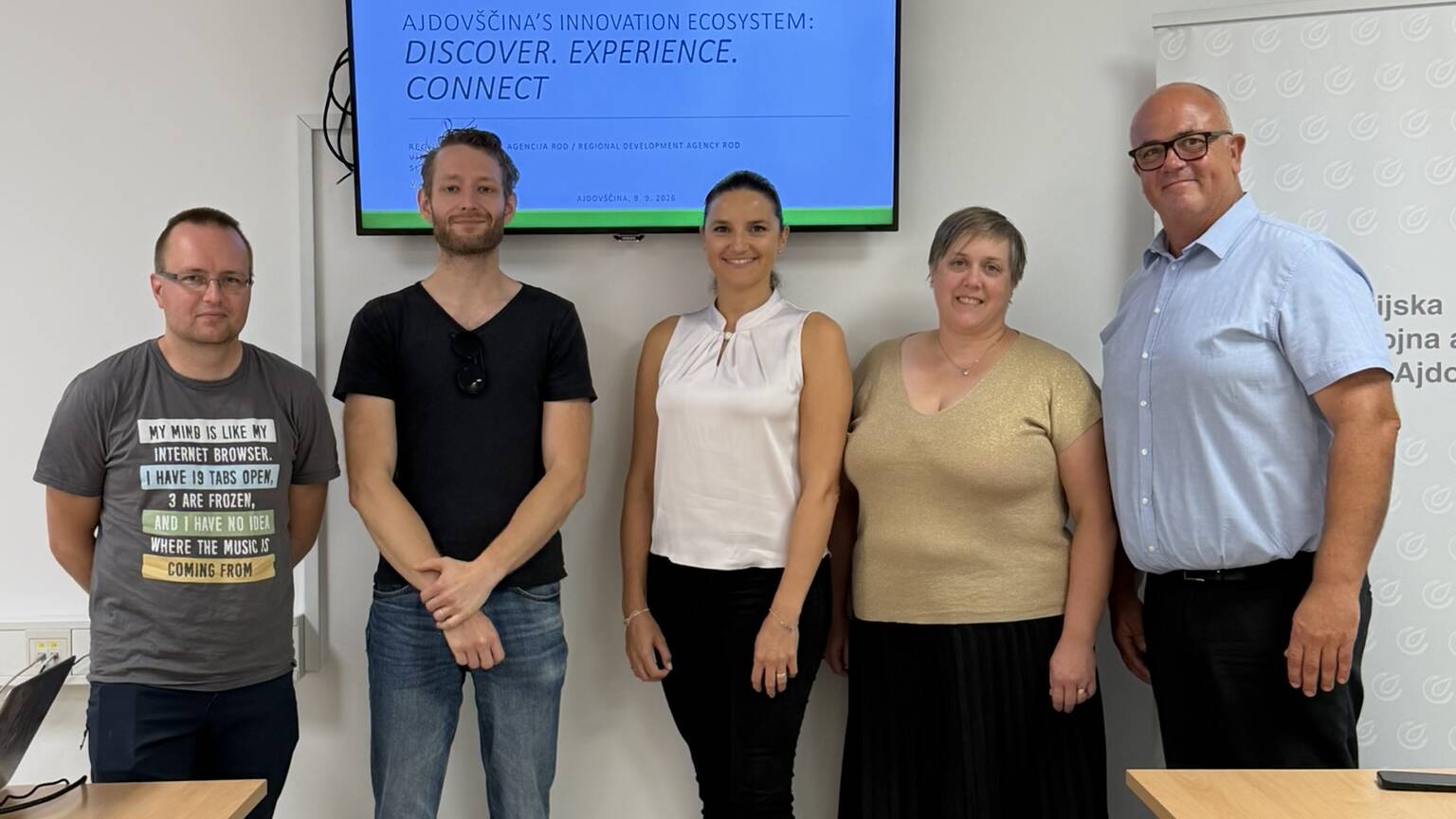
Our third Slovenian visit took us to the Regional Development Agency ROD, where Bogdan, Patricija and Nives introduced us to what is happening in the Vipava Valley.
Northborne and the danger of copying cities
Northborne is developing a rural, community-based accelerator for startups and innovative companies in Ostrobothnia and Västernorrland. Rural is not a decorative adjective. Our communities are dispersed, our industries differ and people may speak different languages before they even begin arguing about terminology. A useful model must be built for those conditions, not copied from a capital city and reduced until it fits.
Entrepreneurship as a continuous process
ROD connects entrepreneurship with rural development, agriculture, tourism and environmental questions. Its work stretches from activities for children in kindergarten to supporting established businesses and attracting international investment.
They treat entrepreneurship as a continuous process. Curiosity begins early, skills develop over time and companies need different support at different stages. Their rural development work similarly grows from the bottom up, connecting local needs, agriculture and entrepreneurship.
A rural accelerator in Ostrobothnia should follow the same logic. It should grow from the industries, knowledge, people and possibilities already present in the region.
Quite a large plan for quite a small place
The clearest example of Ajdovščina’s ambition is Biotehnopolis, a planned science and technology park north of the local airfield. It aims to bring high-tech companies, research and education together across biotechnology, aviation, information technology and green technologies. The planned area covers around 18 hectares, with the first phase estimated at approximately 200 million euros.
That is quite a large plan for quite a small place.
But perhaps that is the point. The size of a place does not have to determine the size of its ambitions. What matters is having decision-makers willing to try, cooperate and say yes before every detail is guaranteed. Ajdovščina appears more interested in finding reasons to begin than reasons to wait.
Before our visit, ROD’s previous international delegation consisted of around 130 Danes. We arrived as two Finns. Possibly easier to accommodate, if slightly less impressive in formation.
The Slovenian structure behind the spaces
The Slovenian spaces had different origins, but they did not operate in isolation. Behind them is SPOT, the Slovenian Business Point: a nationwide system offering potential entrepreneurs and existing companies free information, advice and help with public administration.
SPOT does not replace local communities. It gives them shared structure. Each space can remain rooted in its region while entrepreneurs still gain access to a recognisable national support system. This combination may be one reason Slovenia felt both local and connected.
A Unicorn and a rental Skoda
Our final visit was the Unicorn Startup and Innovation Hub in Graz, Austria. Unfortunately, our only photograph appears to be of the rental Škoda. It was a perfectly respectable Škoda, but not the most convincing documentation of an innovation hub.
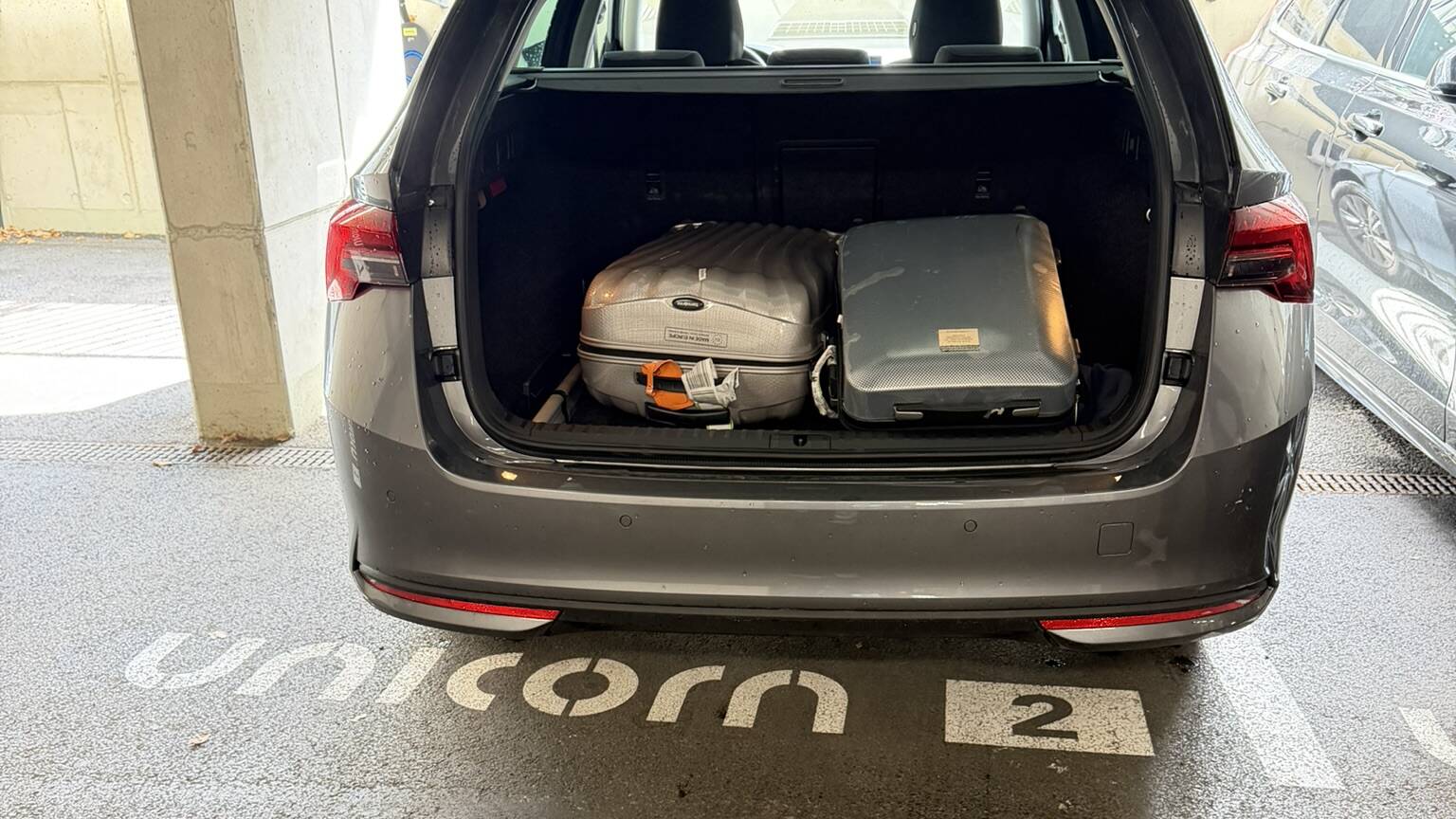
Located on the University of Graz campus, Unicorn connects research, entrepreneurship and industry. It offers coworking, events and programmes helping students and researchers turn ideas and research results into companies through coaching, mentoring, networks, workspace and, in some programmes, substantial financial support.
The values felt familiar. The conditions, not so much.
Graz is a large university city where research, students, companies, investors and public actors are concentrated in one place. Northborne’s regions are rural, dispersed and separated by longer distances. We cannot simply place a Unicorn in the middle and expect everyone to gallop towards it.
Still, its lesson matters. Research does not automatically become a company. Industry does not automatically discover new ideas. People do not automatically meet merely because they exist in the same region. Someone must build the connections and give people a place and reason to meet.
What we bring home
The models differed. Kovačnica grew from grassroots community. Katapult was built around a successful industrial company sharing its strength. ROD showed what ambitious regional development and courageous decisions can achieve. Unicorn connected research and entrepreneurship around a university.
Ostrobothnia cannot copy any of them directly. Our distances are longer, communities more dispersed and resources divided between towns and organisations. Yet the similarities mattered more: every region is trying to retain talent, create opportunities and connect people who would benefit from knowing one another.
Networks matter. Continuous activity matters. Visible examples of local people and products matter. We also repeatedly encountered the value of connecting software to physical products – something especially relevant to an industrial region like ours.
Language matters too. Not everyone with a promising idea considers themselves a startup founder. Engineers, farmers, students, researchers and inventors may not identify as entrepreneurs. If our language is narrow or soaked in startup terminology, we risk excluding exactly the people we hope to reach.
This is especially important in a multilingual region. We need to communicate across languages while finding shared words for curiosity, problem-solving and creating something new. The purpose is not to make everyone speak like the startup world. It is to make the community understandable and welcoming to people outside it.
The places we visited spoke about coworkers, entrepreneurs, innovators, researchers and even acrobats. Behind the words was the same idea: create places where people can meet. Keep something happening. Make knowledge and equipment accessible. Show what local people are creating. Help others believe they can take part.
Overall, the people we met felt much like us, only speaking another language. And they had mountains!
Northborne’s task is not to import one accelerator model. It is to learn from all of them and build something suited to our geography, industries, languages and people – local enough to feel familiar, but open enough for as many people as possible to find their way in.
Thank you
Thanks a lot, Andraž, Tamara, Taja, Olga, Bogdan, Nives, Patricija, Bernhard and everyone else we met. We hope we meet again.
Hvala, Slovenia. Danke schön, Austria.
Read the first part of the travel log here: Forging a community in Kranj –Why an accelerator needs more than desks and reliable Wi-Fi – Centria
Read the second part of the travel log here: Hardware is hard and success should travel – What Katapult and Dewesoft are giving back to Trbovlje – Centria
The Northborne – Accelerating bold futures from remote beginnings project is an Interreg Aurora project co-funded by the European Union. Region Västernorrland and the Regional Council of Lapland also act as funding partners. The project partners are Centria University of Applied Sciences, Bizmaker, Coompanion, and Nykarleby Innovation Center.